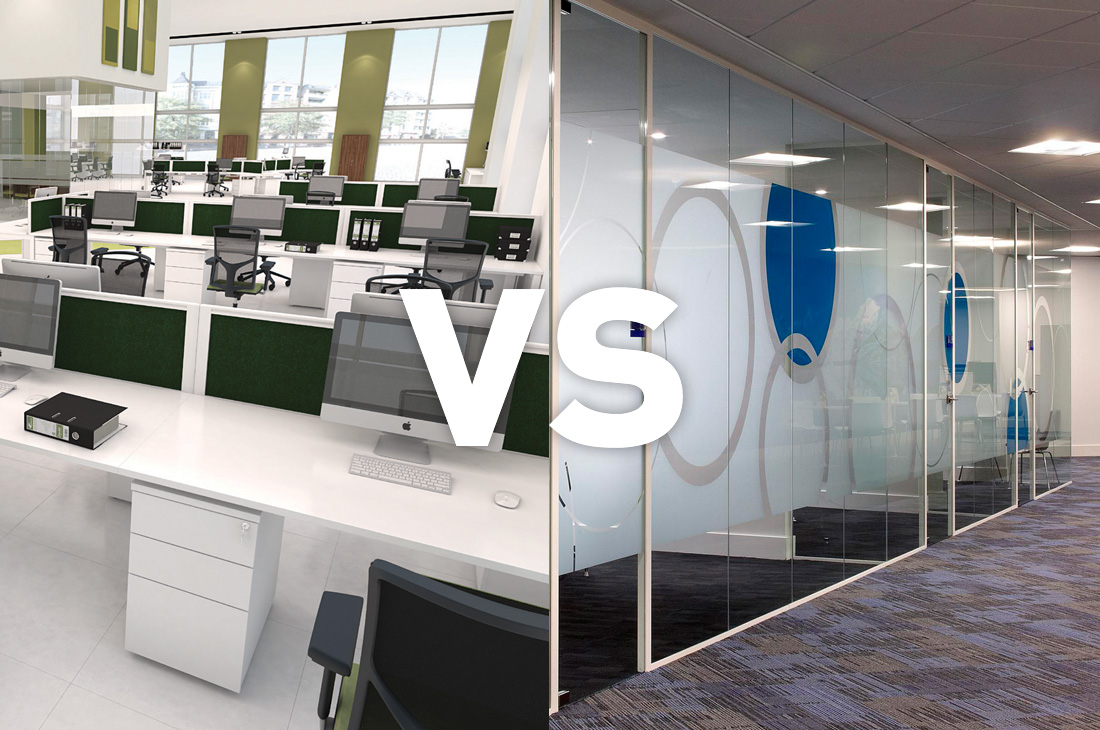
Open vs. Closed Layouts in Commercial Interior Space
When designing a commercial interior space, one of the most important decisions is choosing between an open or closed layout. This choice directly impacts workflow, communication, privacy, and employee satisfaction. Both layouts have distinct advantages and challenges, and the best option often depends on your business type, team structure, and company culture. Let’s explore the differences and what to consider when making your decision.

🔹 Open Layout: Encouraging Collaboration and Flexibility
What is it?
An open layout removes physical barriers like cubicles or enclosed offices, creating a shared space with communal desks or workstations.
Advantages:
- Improved Communication: Team members interact more easily, leading to quicker decisions and stronger collaboration.
- Cost-Effective: Fewer partitions and private offices reduce construction and furniture costs.
- Flexible Space: Easy to reconfigure for growing teams or different departments.
- Modern Aesthetic: Open layouts often feel more spacious and reflect a transparent, progressive work culture.
Challenges:
- Noise and Distractions: The lack of barriers can lead to a noisy environment, affecting focus.
- Limited Privacy: Confidential conversations or focused work may become difficult.
- Personal Space Issues: Employees may feel a lack of ownership or comfort in shared spaces.
🔹 Closed Layout: Prioritizing Focus and Privacy
What is it?
A closed layout features individual offices or high-walled cubicles, separating employees by physical partitions.
Advantages:
- Privacy: Ideal for roles requiring confidentiality, such as HR or legal departments.
- Fewer Distractions: Reduced noise helps with deep concentration and productivity.
- Personalization: Employees can customize their spaces, creating a sense of ownership.
- Professionalism: Offers a more formal and structured feel, especially for client-facing businesses.
Challenges:
- Reduced Interaction: Limited spontaneous communication may hinder team collaboration.
- Higher Costs: More materials, walls, and furniture increase construction and maintenance expenses.
- Space Constraints: Can make smaller offices feel cramped or closed off.
🔹 Choosing the Right Layout for Your Business
Instead of choosing strictly between open or closed, many modern commercial spaces adopt a hybrid layout—blending collaborative zones with private workspaces. This offers flexibility, allowing employees to move between open areas and quiet rooms based on their tasks.
Factors to Consider:
- Nature of Work: Creative teams may benefit from open spaces, while finance or legal teams may need more privacy.
- Company Culture: Startups often prefer open, agile environments; established firms may lean towards structured spaces.
- Team Size: Larger teams might require defined zones to reduce distractions.
- Client Interaction: Businesses frequently hosting clients might need private meeting rooms or offices.
Final Thoughts
The layout of your commercial interior space has a lasting impact on productivity, employee morale, and business operations. While open layouts encourage collaboration, closed layouts support privacy and focus. The key is to understand your team’s needs and create a space that supports both your people and your brand.
Whether you’re designing a new workspace or renovating an old one, strike a balance that enhances comfort, efficiency, and engagement. The right layout is not just about space—it’s about supporting success.